

In the park
AKA the communal backyard
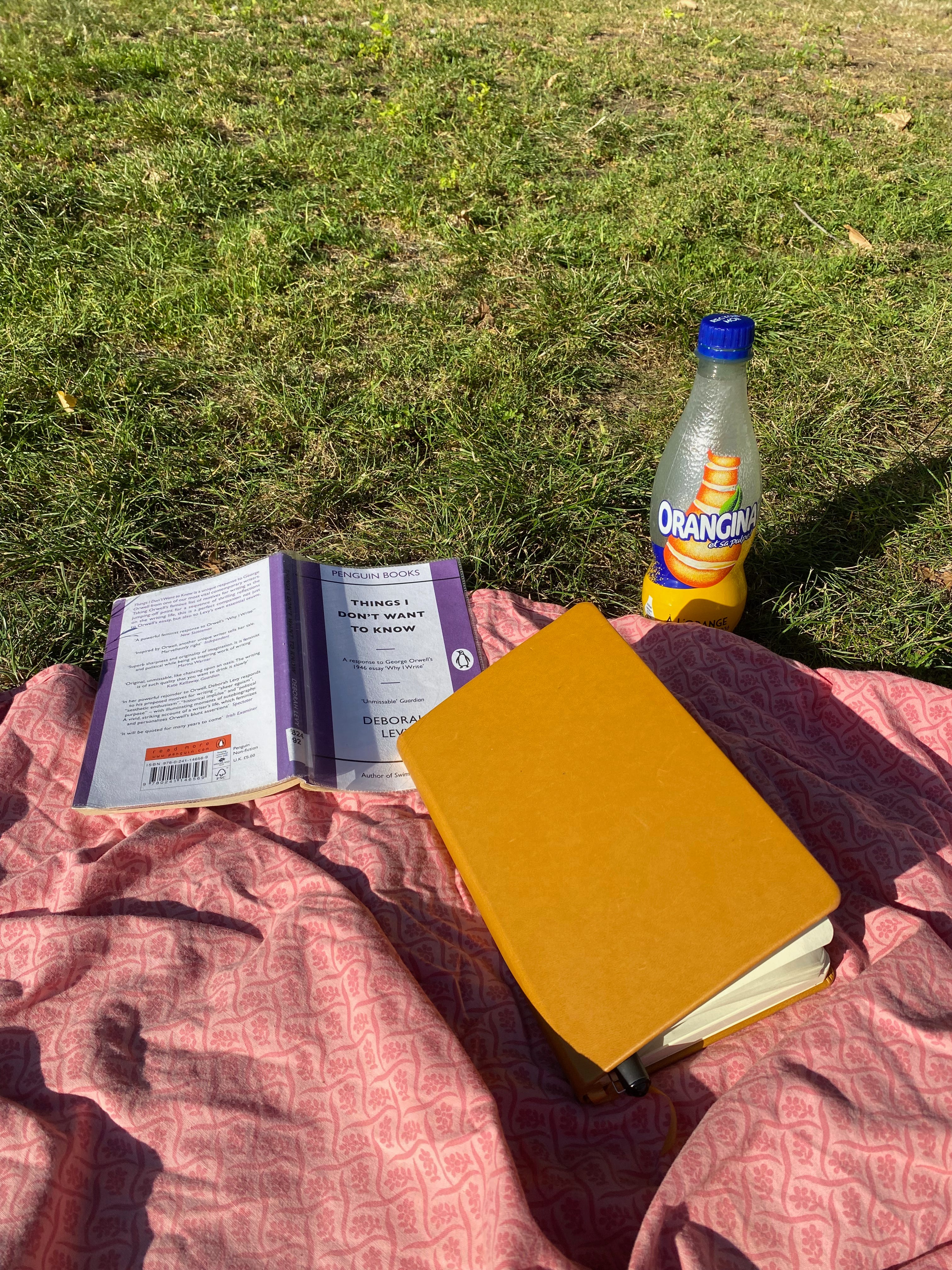
It’s September, and there is one last burst of sunshine in London. The temperature crawls up to 30 degrees by lunchtime. I decide to leave my flat and head to the park. It’s too hot to wear shoes that aren’t sandals, but some of the trees have already started to shed and so as I walk down the road I get flakes of leaves stuck in between my toes.
In the park, everyone is welcome. My bank account is in the negative, but that doesn’t matter here. I spread out a tablecloth on the ground. I can feel the occasional rumble of the Bakerloo line beneath me when I lie on my stomach.
I watch a conversation take place between two men. One is much older than the other. They are sitting far enough apart for me to guess that they did not know each other before this conversation. The distance suggests a slow shuffle over to each other. Both are topless. One of the men, the older one, has a guitar, and when the younger man leaves, he starts to play it.
A woman watches her child stumble about in the shade of a tree, caught up in some story of her own creation, playing out a narrative. Two people share a takeaway pizza out of a cardboard box on a picnic table. A man in a checked shirt sits on a bench, soaking up the sun, earphones in, getting shiny. A woman walks her dog, a skinny greyhound wearing a silky blue ribbon around its neck.
I get so wrapped up in my book that I forget to look up for half an hour. When I do, I find that there are four other women sitting in the park who are also reading by themselves. I wonder whether we should congregate together to form a fellowship of Women Reading Alone.
During the Covid-19 pandemic, people without the luxury of gardens looked for outdoor spaces to escape the confines of their homes. We started to talk about access to green spaces in terms of wellness and wellbeing. Part of that reasoning is straightforward: green spaces improve air quality and reduce noise pollution. There’s also a less quantifiable feeling to be found from being in a green space. Nature brings a calmness and a clear-headedness. It feels good in a way that is hard to put into words.
Nature is a word that does a lot of heavy lifting, though, and “green space” is so loosely defined that it’s not really that useful. Parks are closer to leisure centres than forests. We need leisure spaces: to deem a park a leisure space is not a bad thing. There’s a more academic term for this concept: a “third place”, a space that is neither the home nor the workplace, but instead somewhere in between. In a third place, you socialise and interact with other people.
A park can be absent of any sense of achievement or productivity. It’s not a hobby. You don’t need to make anything. In the park, you eavesdrop on conversations; you feel the grass tickle your skin; you waste time. Parks are for eating supermarket olives and packets of crisps; for teenagers to show off their football skills in front of the people they have crushes on; for old people to sit on benches when their legs get tired.